Resiliency

What does it mean to be resilient?

Despite the fact that life doesn't come with a road map, everyone will face a variety of challenges, from the mundane to the traumatic, such as the death of a loved one, a life-altering accident, or a serious illness. People react to change in different ways, bringing with them a variety of thoughts, feelings, and feelings of uncertainty. Resilience is a big factor in how well people can deal with changes in their lives and stressful situations.

Adaptability in the face of adversity, trauma, tragedy, threats, or significant sources of stress, such as family and relationship issues, serious health issues, or workplace and financial stressors, is defined by psychologists as the process of adapting well. As much as resilience is about "bouncing back," it can also be about profound personal growth.

In spite of the fact that these adversities are difficult, they do not have to dictate the course of your life. It is possible to control, modify, and grow in many areas of your life. That's what resilience is all about. Resilience is not only a means of coping with adversity, but it can also help you grow and even improve your life.

Can you lose resiliency?

Have you ever reflected back on your life and wondered what happened to all your resiliency? When life throws you a curveball, you need to be able to bounce back with stoic resolve. Resilience is like a hand that reaches out to help you get back up after you've been knocked down. If you lack the ability to bounce back from adversity, it may take you longer and require more effort on your part to get back on your feet. You can do anything you set your mind to.

It is possible to run out of resilience if you or your community are subjected to a traumatic event that is difficult to recover from. You can also lose your ability to bounce back after a long period of adversity. Resilience deteriorates at different rates for people with different levels of sensitivity and determination.

It is possible to run out of emotional, physical, or community resilience after a traumatic event or over time if you aren't properly coping with life's challenges. Resilience is a trait that fluctuates rather than being fixed. Resilience may decline more slowly in someone who is more indestructible than in someone who is more sensitive or self-conscious.

How can you regain resiliency?

As a first step, connect. In both good and bad times, you can rely on the support and acceptance of your loved ones and friends. Volunteer your time or join a religious or spiritual group to make new friends.

Make each day count. Every day, do something that makes you feel accomplished and gives you a sense of direction. Make a plan and stick to it so you can have hope for the future.

Experimentation is a great way to learn. Think back to times when you've had to deal with difficult situations. Take stock of the abilities and tactics that got you through tough times in the past. You could even keep a journal of your past experiences to better understand your own patterns of good and bad behavior and to use that knowledge to better your present and future actions.

Don't give up hope. It's impossible to rewrite the past, but it's always possible to look to the future. Accepting and even anticipating change eases the process of adapting and reduces anxiety when confronting new challenges.

Take good care of yourself. Feelings and needs should always come first. Keep yourself occupied with things you find pleasurable. Make it a point to get some exercise every day. Rest well at night. Maintain a balanced diet to prevent disease. Yoga, meditation, guided imagery, deep breathing, or prayer are all stress management and relaxation techniques.

Take control of your own fate. Your problems are not to be ignored. Think about what needs to be done, make a strategy, and then get started. Knowing that your situation can get better if you put in the effort will help you deal with any major setbacks, traumas, or losses.

Create a plan. https://acrobat.adobe.com/link/review?uri=urn:aaid:scds:US:229e62b5-724c-31a3-9778-bfcc30b89c5a
Don't forget about self-care

〰️

Don't forget about self-care 〰️

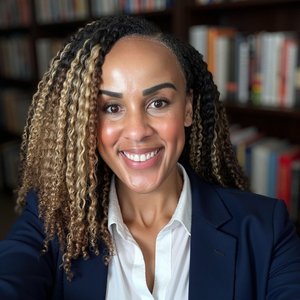
Dr. Sonya Boone, DBH, LCSW, MSW, MHSA

Dr. Sonya K. Boone, DBH, MHSA, MSW, MSL, LCSW, is a Doctor of Behavioral Health and multi-state Licensed Clinical Social Worker with more than 15 years of experience spanning integrated healthcare, academic instruction, military behavioral health, inpatient and outpatient clinical care, clinical supervision, and telehealth service delivery. Her work centers on integrating behavioral health into medical, organizational, and community systems, with an emphasis on interdisciplinary collaboration, trauma-informed practice, and sustainable workforce development.

Dr. Boone currently serves as an adjunct professor at the doctoral level, teaching courses in behavioral health integration, primary care behavioral health models, healthcare operations, health equity, and healthcare entrepreneurship. Her teaching philosophy emphasizes applied systems thinking, ethical leadership, and translating clinical expertise into scalable, real-world healthcare solutions. She is deeply engaged in mentoring doctoral students and advanced clinicians in bridging clinical care, administration, policy, and innovation.

Clinically, Dr. Boone has delivered thousands of psychotherapy sessions across outpatient, inpatient, and virtual settings. She utilizes evidence-based modalities including Cognitive Behavioral Therapy (CBT), Acceptance and Commitment Therapy (ACT), Dialectical Behavior Therapy (DBT), Motivational Interviewing, and solution-focused approaches. Her clinical expertise includes work with anxiety disorders, depressive disorders, trauma and stress-related conditions, ADHD, adjustment disorders, chronic medical conditions, and complex psychosocial presentations within integrated care environments. She has extensive experience conducting biopsychosocial assessments and collaborating closely with interdisciplinary medical teams to support whole-person care.

In addition to direct clinical work, Dr. Boone is an experienced clinical supervisor and consultant. She provides supervision and professional development support to licensed and provisionally licensed clinicians across multiple states, focusing on ethical practice, diagnostic formulation, documentation quality, clinical reasoning, and professional identity development. Her supervisory approach integrates clinical depth with systems-level awareness, supporting clinicians working in high-acuity, integrated, and resource-constrained settings.

Dr. Boone is also a coauthor and lead chapter editor on an upcoming Biodyne Integrated Care textbook developed in collaboration with the Cummings Graduate Institute. In this role, she contributes scholarly and applied content addressing integrated care frameworks, interdisciplinary practice models, and the operationalization of behavioral health within complex healthcare systems. Her editorial leadership reflects her commitment to advancing evidence-based, systems-informed approaches to integrated behavioral health education and practice.

She additionally serves as a U.S. Army Reserve Medical Service Corps Officer and has held leadership roles including Hospital Adjutant, Victim Advocate, and Suicide Prevention Leader. Her military service has strengthened her expertise in military cultural competence, crisis intervention, leadership under pressure, and behavioral health support for service members and their families. She has received multiple military honors, including the Meritorious Service Medal and Army Commendation Medals, in recognition of her leadership and service.

Dr. Boone holds a Doctor of Behavioral Health from Arizona State University, a Master of Social Work from Virginia Commonwealth University, a Master of Health Services Administration from Strayer University, and a Master of Studies in Law from the University of Southern California. This interdisciplinary academic foundation enables her to approach behavioral health through clinical, administrative, legal, and systems-level lenses. She is also a contributing author to scholarly and applied works focused on integrated care delivery and behavioral health innovation.

Her academic and professional interests include integrated behavioral health delivery, clinician burnout prevention, health equity, trauma-informed systems, military and veteran mental health, and the development of scalable behavioral health interventions within medical, academic, and organizational settings. Dr. Boone maintains active clinical licensure in multiple U.S. states and continues to engage in clinical practice, teaching, supervision, consultation, and scholarly writing.

Previous
Previous

Mindfulness

Next
Next

Depression